

Reusing stored holiday lights can make sense when the sets are in good condition, suited to the location, and compatible with this year’s design. Start with an inspection on the ground, not a test after they are already attached to the house. A strand that lights up once is not automatically suitable for outdoor use. Damaged insulation, cracked sockets, missing parts, questionable plugs, and unclear product ratings are reasons to set a component aside. If the design changes, the older sets may also be the wrong length or type even when they still work.
Sort First, Then Test
Lay out the boxes in a dry, well-lit area. Separate outdoor-rated products from indoor decorations and keep labels or manufacturer instructions with each set. Look for exposed wire, cuts, pinched cable, loose sockets, corrosion, broken bulbs, and plugs that appear altered or overheated. Do not repair damaged insulation with tape and return the set to service. Replace damaged components according to manufacturer instructions or retire the set.
The Consumer Product Safety Commission’s holiday guidance recommends checking each light set for broken or cracked sockets, frayed or bare wires, and loose connections, and discarding damaged sets. It also distinguishes indoor and outdoor use. That advice provides a useful baseline, but it cannot tell whether a particular package is appropriate for a particular roofline or outlet.
Test intact sets according to their instructions before installation. A quick power test can expose failed sections, but do not assume it explains the cause. Some products have replaceable bulbs or fuses; others require a different remedy. Use only manufacturer-specified parts. If a breaker or protective outlet repeatedly trips, stop and have the circuit and equipment evaluated instead of resetting it over and over.
Decide Whether the Old Sets Fit the New Layout
Suppose a Lee’s Summit homeowner moved from a short porch display to a roof outline with two peaks. The old strands may be safe yet too short, mismatched in color, or designed for a different spacing. Stretching cords to reach a new peak or stacking connections beyond the product’s directions is not a good solution. This is a hypothetical planning situation; the actual count depends on measured roof edges and product specifications.
Color consistency is easy to miss. “Warm white” can vary across product lines and production years. View sample sections side by side after dark before mixing old and new sets across the same continuous edge. If the difference is noticeable, reuse the older lights in a separate accent zone instead of alternating them across the front roofline.
The condition of the clips and cords matters as much as the bulbs. A cracked clip can release a strand in wind. A cable with an unknown rating should not become the backbone of the new installation. Keep equipment documentation, especially when several brands are stored together. Without clear labels, a professional may recommend replacement rather than guessing at compatibility.
Make a small inventory while the components are on the ground. Note the product model, number of usable sets, known defects, and the area each set served last year. A photograph of the label is more reliable than a handwritten description of “the warm white box.” Keep compatible spare bulbs or fuses only if the manufacturer specifies them. Unidentified loose parts should not be assumed to fit a strand because they look similar.
Storage history provides context but is not a safety certificate. A set kept dry in a labeled container may be easier to inspect than one wound tightly around a metal hanger, but both still need a current check. Inspect the entire length, including the sections that were hidden under tape or wrapped around a reel. If a plug or connector has signs of moisture damage, do not energize it to see whether it still works.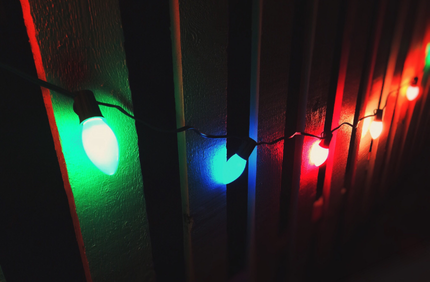
What a Professional Would Review
An installer can compare the house’s measured edges with strand lengths, connection limits, attachment surfaces, and power locations. They may suggest keeping some existing accents while using coordinated new product on the main roofline. The decision should reflect condition and design fit, not merely whether a strand was purchased recently.
Ask how customer-owned materials are handled. Some service models use their own lights and maintenance parts, and coverage can differ when a customer supplies old sets. Chris Light Co’s Lee’s Summit installation page describes its local holiday lighting service, while its Christmas lights overview describes a custom design and takedown process. Confirm material ownership, replacement, storage, and midseason service in the proposal rather than inferring those terms from a general page.
If the setup has a roof or tall ladder component, do not treat a successful ground test as permission to install it yourself. Height and pitch create separate risks. A ground inspection establishes the condition of the lights you can see; it does not assess every outlet, attachment point, or weather exposure on the building.
Cost should be compared over more than one evening. Reusing old sets can save on materials, but troubleshooting an unknown mix of products may consume installation time and make a matching midseason repair difficult. Ask for the price and service terms of both approaches. A replacement recommendation is more useful when it identifies a failed inspection point or a specific design mismatch, rather than simply calling the older lights outdated.
There may be a middle option. Keep intact, compatible strands for a low entry feature while replacing the continuous roofline with a coordinated product. That preserves useful materials without making the most visible part of the display depend on a patchwork of different whites and bulb spacing. Ask whether the service provider will maintain customer-owned strands; if it will not, account for that difference when comparing the two designs.
Set a decision point before installation day. If testing reveals more failures than expected, agree in advance whether the plan becomes a smaller display, uses approved replacement sets, or pauses for a new estimate. Otherwise the crew and homeowner may be tempted to solve a materials shortage by extending a run beyond its instructions. A simple contingency makes the project less vulnerable to surprises from last year’s boxes.
Do not rely on age alone. Some older sets may be intact and clearly labeled, while a newer set can be damaged by careless storage or a pinched cord. The inspection should be based on present condition and documented product directions. If a homeowner cannot identify the manufacturer or electrical rating, that uncertainty belongs in the decision. A professional may decline to install a customer-supplied set whose specifications cannot be verified, even if it illuminated during a brief test. That is a scope and compatibility judgment, not a verdict on every older light.
Common Questions About Reuse
Is a working strand safe just because it turns on?
No. It can still have damaged insulation, a cracked socket, or an unsuitable rating. Inspect it while unplugged and follow the product instructions. If damage is visible, take the set out of use even if every bulb illuminates.
Can different LED brands be connected end to end?
Do not assume they can. Connection limits, connector designs, and electrical requirements vary. Follow each manufacturer’s instructions; if compatibility cannot be established, use separate runs or replace the mismatched set. A visually similar plug does not prove an approved combination.
What should be saved after takedown?
Keep labels, instructions, a simple photo of the layout, and notes on any failure. Store dry components without sharply bending cords or crushing sockets. Next year’s inspection is still necessary, even when the lights were working at removal.
The reuse decision is a three-part check: condition, compatibility, and fit for the new design. Passing one part does not settle the other two. That small review before installation can prevent a preventable midseason outage or a display assembled from incompatible pieces.

Reach out to our team at Chris Light Co to fill out a form online or call us at 913-851-5882. We’ll take care of the rest. Outdoor lighting doesn’t have to be complicated. You don’t need a dozen gadgets or apps to make your home look great at night. We design simple, beautiful lighting that works year after year.
No constant repairs. No confusing systems. Just lights that make your home feel warm and safe. Our team handles everything, from design to installation. Call us to find out just how easy it can be.
