

A holiday light plan has two linked decisions: what the home should look like after dark and how the display will be powered. Choose a limited color palette first, test real samples on the property, and then ask an installer to map the products to suitable outlets and rated connections. LED lights offer flexible colors and lower energy use than traditional incandescent lighting, but “LED” does not mean every product has the same brightness, color, or connection limit. The labels and the specific installation still matter.
Make the Color Decision at Night
Warm white can look soft and familiar, while a cooler white reads brighter against some siding and masonry. The words on a package are a starting point, not a color guarantee. Two products both labeled warm white may look different side by side. Compare actual samples at dusk and after dark from the sidewalk or curb, where the full display will be viewed.
For a Lenexa home with brick, painted trim, and one large front tree, an example plan might use one consistent white on the roofline and a single color accent in the tree. A different home might benefit from multicolor lights on the entry with a quieter roof outline. These are examples, not claims about any property. The choice depends on the architecture, ambient street lighting, neighboring displays, and the homeowner’s preference.
Choose one dominant feature before adding accents. If the roof, windows, shrubs, and trees all use different colors and effects, the eye has no clear place to settle. Photograph two or three sample combinations from the same location; phone cameras can distort color, so also compare them in person. Keep product names and color descriptions in the plan to avoid a mismatched replacement later.
Compare steady and animated effects separately. A changing color sequence can draw attention to an entrance, but a constantly shifting roofline may make the building outline less legible. If the display faces a bedroom, intersection, or neighboring window, view the effect from those places too. The right level of brightness depends on surroundings and preference; it cannot be selected from a catalog photo alone. Record the chosen effect settings so the display does not change unexpectedly after a power interruption.
Choose where transitions happen. A white roofline that meets a colored porch may look intentional if the change aligns with an architectural break. A color change halfway across a continuous eave may appear accidental. A designer can use a nighttime mockup or short sample run to check that transition. This is more informative than deciding among color names in isolation.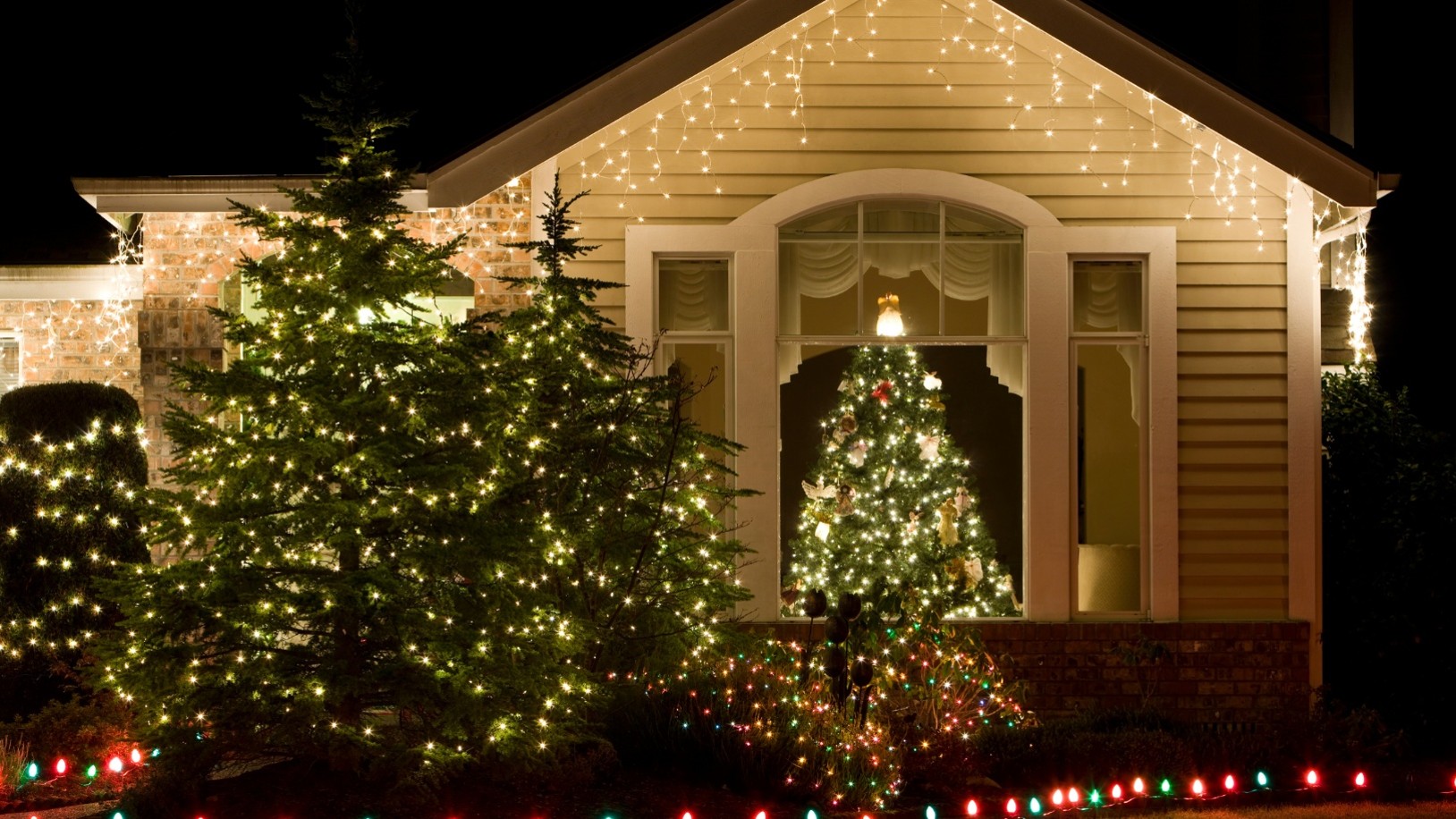
Understand What LED Efficiency Does and Does Not Decide
The U.S. Department of Energy’s LED lighting guide explains that LEDs use less energy than incandescent lighting and can last longer. That supports considering LED products for a seasonal display. It does not provide a universal cost saving for a particular house: operating hours, number of strings, product wattage, utility rate, and installation design change the result.
Read the actual wattage and connection instructions for the selected product. A low-wattage strand still has a manufacturer limit on how many sets can be connected. Do not transfer a limit from one brand or model to another. A professional can calculate the connected load and plan separate runs where required. If an outlet, breaker, or timer has known problems, have it evaluated before installation.
Timers are useful when the homeowner wants a predictable schedule, but they should be suited to the environment and the connected equipment. Decide when the display should turn on, when it should turn off, and who can change the settings. An automatic schedule is only convenient when a household can find and understand its controls.
Also ask how color and brightness appear beside existing porch or landscape lighting. A warm roofline may look different next to a cool security fixture. That does not mean the permanent light must be changed. It means the seasonal sample should be viewed with the usual exterior lights operating. The same test can reveal whether a bright accent shines into a bedroom window or makes the front steps harder to distinguish.
Estimate energy use from the products, not from a general claim about LEDs. Add the rated watts of the selected equipment, multiply by the planned operating hours, and compare the result with the utility rate if cost is a deciding factor. This is a planning estimate, not a substitute for an electrician assessing circuit capacity. Product ratings may also include adapters or controllers that need their own location and weather protection. The installation plan should say where these components will sit and how they can be accessed for service.
Put Wiring on the Design Sketch
The sketch should mark roof edges, trees, entry accents, outlets, and likely cord routes. That reveals whether a proposed color change requires an awkward connection across a walkway or a long cable visible from the street. A different accent location may make the display cleaner and easier to service.
An installer would examine the available outlets, product labels, accessible attachment points, and places where moisture or foot traffic affect the route. They would compare each illuminated zone with the planned power supply and note which section can be isolated if it fails. A sketch can flag questions, but only an on-site review can confirm the suitability of the actual electrical and mounting conditions.
Ask for a zone list that a homeowner can understand: roofline, entry, tree, and any separate landscape accent. Next to each zone, record its color, control, and power source. That document can prevent a small service issue from becoming a search through several cords and timers. It also makes next year’s setup easier to adapt if the homeowner decides to add a tree or remove one feature.
When comparing proposals, check whether the quoted design covers the exact products and zones shown in the mockup. A palette approved on a screen should be tested against available products before installation. If a matching color is unavailable, review a physical substitute instead of accepting a nominally similar label. The final design should be buildable and maintainable with the components actually supplied.
Chris Light Co’s Lenexa Christmas light installation page is the relevant local service destination. Its Christmas lights service overview describes custom designs with LED lights and seasonal installation and removal. Ask for the chosen color, product, operating schedule, and power route to be recorded in the property-specific plan.
Three Decisions That Often Get Missed
Do colored lights always need a multicolor roofline?
No. A single colored accent on a tree or entrance can be easier to read against a consistent roof outline. Compare the schemes from the viewing distance that matters. The design should suit the home, not a rule about how many colors a holiday display ought to contain.
Will LEDs prevent an overloaded outlet?
No. Lower energy use can reduce load, but capacity and product connection limits still need to be checked for the actual arrangement. Do not guess from bulb count or connect more sets than the instructions allow. Repeated tripping signals a problem that needs evaluation.
What if one section needs a replacement midseason?
Record the model and color of the original product. A nominally similar white may look different, especially along one continuous roof edge. Ask whether a matching spare is available and whether a failed zone can be isolated without disturbing the rest of the display.
The best palette is one the homeowner likes from the street and can maintain through the season. Sample the color, document the products, and make the power route part of the design. That produces a clearer brief than choosing bulbs by appearance alone.

Reach out to our team at Chris Light Co to fill out a form online or call us at 913-851-5882. We’ll take care of the rest. Outdoor lighting doesn’t have to be complicated. You don’t need a dozen gadgets or apps to make your home look great at night. We design simple, beautiful lighting that works year after year.
No constant repairs. No confusing systems. Just lights that make your home feel warm and safe. Our team handles everything, from design to installation. Call us to find out just how easy it can be.
